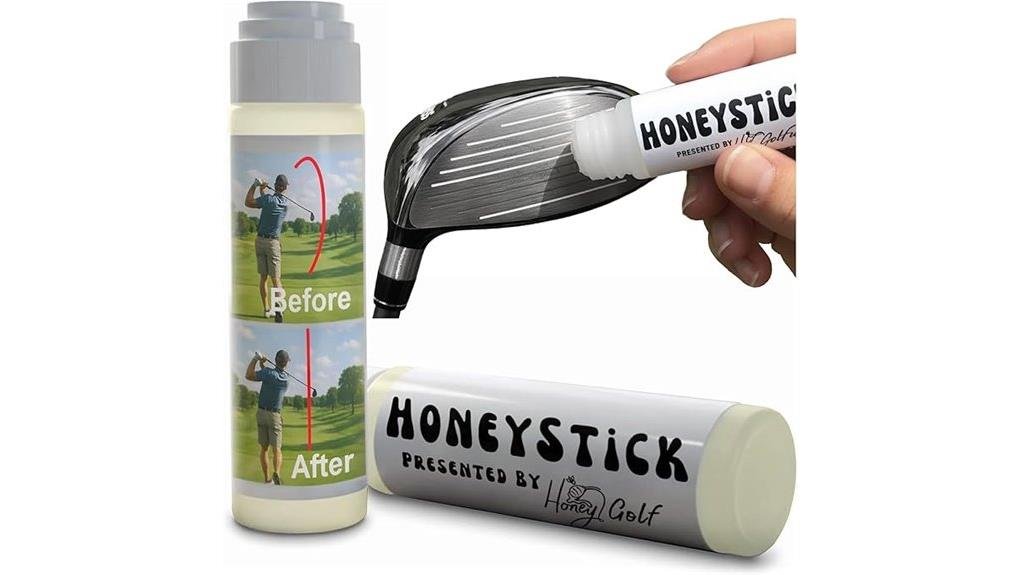
You’ll find HoneyStick gives you instant, diagnostic feedback by leaving a tacky impact mark that shows exactly where you hit the face and whether you’re opening or closing it. It boosts friction on centered strikes, producing measurable ball-speed and carry gains on launch monitors, and often trims sidespin for straighter flight. A pocket-sized, durable applicator fits practice routines and club fittings. Keep going to see test numbers, application tips, and who benefits most.
Some Key Takeaways
- HoneyStick creates a tacky layer on the clubface that reveals exact impact location with visible marks for quick diagnostic feedback.
- Centered strikes tracked with HoneyStick produce higher ball speed, measurable carry gains, and tighter shot dispersion.
- Marks also show face angle and reduced sidespin, helping diagnose slice causes versus swing-path issues.
- Portable 50 ml bottle delivers thousands of applications, holds tackiness, and is easy to apply during practice or rounds.
- Best suited for mid-to-high handicappers and club fitters as an affordable, non-invasive training and diagnostic aid.
Quick Verdict: Does HoneyStick Anti Slice Gel Fix Your Slice and Add Distance?
Wondering if HoneyStick Anti Slice Gel will actually fix your slice and add distance? You’ll see measurable changes quickly: the gel optimizes friction for centered strikes, so you get more ball speed and carry when your contact improves. Use it during practice to get instant feedback on where you’re hitting and whether face angle or swing path needs work. You’ll assess swing alignment through visible marks and make targeted adjustments that translate on-course. It won’t magically cure every swing fault, but it gives you reliable data and a portable, practical tool that helps you belong to the focused, improvement-oriented players. It’s a useful accessory for golfers who use swing analyzers to track and improve their technique.
How HoneyStick Works on the Clubface and What the Impact Mark Reveals
When you wipe HoneyStick Anti Slice Gel onto your clubface, it creates a thin, tacky layer that momentarily increases friction at impact, so you get a clearer transfer of energy and a distinct, visible mark where the ball contacted the face. You’ll see whether strikes are true centered impact or off-heel/toe, enabling precise adjustments to stance and swing path. The mark’s shape and location tell you face angle at contact; paired with reduced side spin, it signals effective Spin reduction. Use that feedback iteratively during practice rounds to refine aim and build confidence with teammates or fellow golfers. Golfers who want targeted relief and recovery on off-days also appreciate massage tools like massage balls to stay loose and improve performance.
Performance Test Results: Distance, Ball Flight Correction, and Durability
Now that you can read precise impact marks to tweak face angle and swing path, it’s time to quantify what those adjustments mean in play. You’ll notice improved impact consistency: centered strikes translate to higher ball speed and measurable carry gains on launch monitor tests. Slice reduction lowered sidespin, tightening shot dispersion by several yards and producing straighter trajectories you’ll trust under pressure. Durability held up through repeated swings; a 50 ml bottle sustained thousands of applications without breakdown, maintaining tack and readable marks. Overall, the gel delivers predictable distance gains, clearer flight correction feedback, and long-lasting use you can rely on. Many golfers pair this with weighted training to reinforce the improved mechanics.
Real-World Use: Application Tips, Weather Resilience, and Portability
Pack the little bottle in your pocket or bag and you’ll have quick access to a clean, no-mess way to check and tweak contact on the course. When you apply, use short, consistent strokes and let the mark dry a few seconds—good application timing guarantees clear impact feedback without smudging. Store the bottle in weatherproof storage or an interior bag pocket to protect viscosity in heat or humidity. It’s pocket-sized for practice and play, so you’ll feel part of a pragmatic crew focused on improvement. Carry extras for rounds, and inspect the nozzle regularly to maintain reliable, repeatable application. For added comfort during long practice sessions, consider using anti-fatigue mats to reduce strain and stay fresh.
Who Should Buy It and How It Compares to Other Anti-Slice Aids
If you’re a mid- to high-handicap golfer struggling with inconsistent face contact and a persistent slice, the HoneyStick Anti Slice Gel is a practical, low-effort tool to add to your bag. You’ll benefit if you want immediate feedback, cleaner centered strikes, and measurable distance gains without changing equipment. Beginner golfers will find it affordable and instructional; club fitters can use it to diagnose impact points quickly. Compared with trainers, weighted clubs, or grip changes, HoneyStick is non-invasive, portable, and diagnostic rather than corrective long-term. Use it alongside lessons or fitting work for efficient, shared progress with your golf community. It’s especially handy for golfers who enjoy the game and like to experiment with different trainer gear during practice.
Some Questions Answered
Is Honeystick Safe for Painted or Coated Clubfaces?
Yes — you can use it on painted or coated clubfaces because the paint safe formulation protects finishes. You’ll notice finish compatibility across drivers, woods, hybrids and irons, so you won’t risk cosmetic damage during routine application. You’ll want to wipe a small test spot first and use gentle, no-mess strokes; that practical check helps you and your playing partners feel confident the gel won’t harm club aesthetics while delivering performance feedback.
Will It Affect My Club’s USGA Conformity?
No — applying it won’t change your club’s USGA rules legal status. You’re using a removable, non-permanent gel that doesn’t alter the club’s construction or characteristics, so it stays within equipment rules. Practically, treat it like a temporary training aid: remove it before tournament play if you’re unsure, document usage if needed, and check event-specific rules. You’ll feel confident knowing it’s intended for practice and on-course adjustments.
How Long Does a Single Application Stay Tacky?
A single application stays tacky through several swings and typically for about one to two rounds depending on conditions, delivering lasting tackiness that you can rely on. You’ll gauge wear by visible impact marks and feel; high heat or heavy humidity shortens tackiness. For consistent feedback plan an application frequency of quick touchups before play or between holes during long sessions so your strikes and diagnostics remain dependable.
Can I Remove It Easily After Play?
Yes — you can remove it easily after play. The water soluble formula wipes off with mild soap and water, so you won’t struggle to clean clubs. If you prefer a faster routine, use a quick drying spray cleaner to dissolve residue and speed drying. You’ll appreciate the practical, low-effort cleanup that fits into group rounds and practice sessions, keeping gear ready while you share tips and stay connected on the course.
Does It Leave Residue on Golf Balls or Tees?
No — it won’t leave noticeable residue on balls or tees when you apply it correctly. You’ll get grip enhancement on the club face without ball staining if you wipe excess gel off and let it set briefly. Practically, carry a cloth for quick touchups; that keeps marks minimal and maintains consistent feedback. You’ll feel confident sharing tips with your group while keeping gear clean and course-friendly.