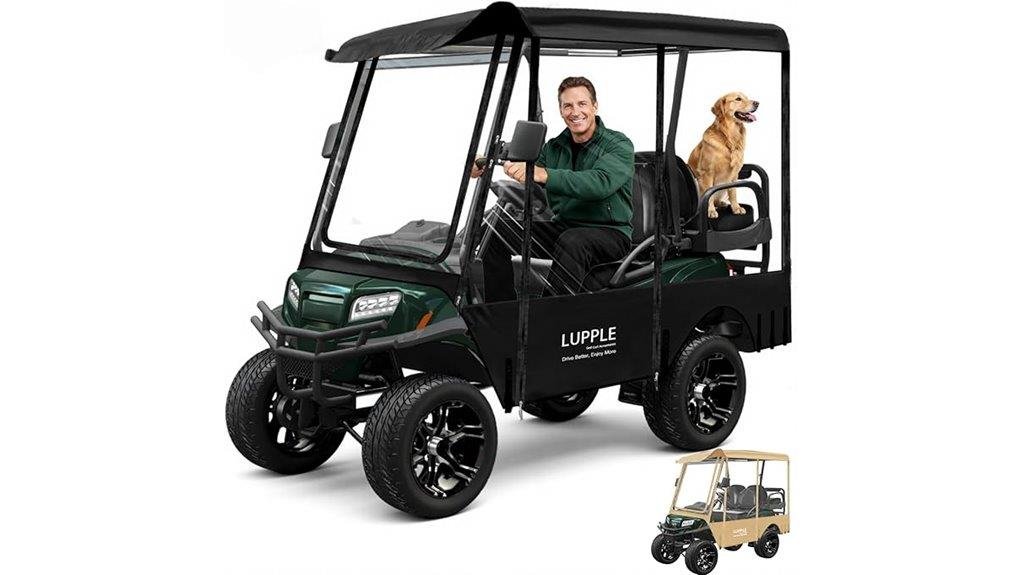
You’ll get a practical, easy-to-install enclosure that fits most 4-passenger extended-roof carts (75–81″) like Club Car and select EZGO models, but not Yamaha G29/Drive2 or forward-facing 4-seat layouts. It’s made from 600D Oxford with clear PVC panels, waterproof seams, heavy-duty zippers, and reinforced stitching for good rain, wind, and cold protection. Visibility is decent with roll-up panels and reflective accents; install solo in minutes. Keep going for full fit, care, and alternatives.
Some Key Takeaways
- Fits most 4-passenger extended-roof carts (Club Car DS, Precedent, Tempo, Onward) for roofs 75–81 inches front-to-rear.
- Constructed from 600D Oxford fabric with clear PVC panels, offering waterproof seams and reinforced stitching for wind resistance.
- Zippers and hook-and-loop flaps seal against gusts; side and rear panels zip, roll up, and stow for easy access.
- Single-person setup in minutes, no tools required; recommended regular PVC cleaning and drying before storage.
- Not compatible with 4-seat forward-facing layouts or Yamaha G29/Drive2; PVC may yellow over time, consider bespoke options for longevity.
Which Carts and Roof Sizes Does This Enclosure Actually Fit?
Wondering if this enclosure will fit your cart? You’ll appreciate clear Fitment Details: it fits most 4-passenger extended-roof carts like Club Car DS, Precedent, Tempo, Onward, and select EZGO models. Check Roof Lengths: designed for 75–81 inches measured front-to-rear. You’ll want to measure your roof before ordering to avoid surprises. Note Model Exceptions: it’s not compatible with 4-seat forward-facing layouts or Yamaha G29/Drive2 units. If you’re part of a group choosing gear together, this straightforward guidance helps everyone pick the right enclosure and feel confident it’ll match your cart and needs. Many golfers also shop for top gear and accessories specifically made for electric golf carts to enhance comfort and performance.
How the Materials and Weather Protection Perform in Rain, Wind, and Cold
Because the enclosure uses a 600D Oxford fabric body with clear PVC panels and reinforced stitching, it blocks rain, wind, and cold more effectively than thin vinyl covers and keeps the cabin noticeably drier and warmer. You’ll appreciate waterproof seams that stop dripping at panel joins, and heavy-duty zippers with hook-and-loop flaps that seal gusts. The PVC windows shelter without fogging when vents are adjusted. Reinforced stitching and robust fabric add durability against tearing in wind. While it’s not heated, the enclosure provides useful thermal insulation, letting you ride comfortably in chillier, wet conditions with your group. Golfers who track conditions with weather stations will value the added shelter and comfort this enclosure provides.
Visibility, Safety, and Reflective Features You Should Test?
After confirming the enclosure keeps rain, wind, and cold out, you should test how well it preserves visibility and alerts others to your presence. Check the full-side clear panels for a wide angle view—sit in each seat and scan for blind spots. Inspect the transparent rear panel to confirm taillights remain visible and confirm night visibility by driving in low light with headlights on. Evaluate glare reduction by noting reflections on PVC panels and adjusting panel tension or angle. Finally, verify reflective accents aid pedestrian detection from different approaches so you and your group feel seen and safe. Also consider how well the enclosure protects your gear from moisture, especially important for golf bag rain covers that keep clubs dry during wet rounds.
Setup, Access, and Daily Use : Real-World Installation and Convenience
When you unfold the enclosure and hang it over your cart, you’ll see the setup is deliberately simple—no tools, no helpers, and you can complete it solo in just a few minutes. You’ll appreciate the quick setup: grab, drape, and secure straps for a snug fit on most 75–81 inch roofs. Zip access on all four sides means entry, ventilation, and gear reach are effortless; panels roll up and stow cleanly. A single person can manage installs and removals, making daily maintenance straightforward—wipe down PVC panels, check reinforced seams, and dry before storage to keep the enclosure reliable. These travel cases and enclosures cater to golfers who want both protection and secure storage for their gear.
Final Verdict and Who Should Buy This Enclosure (Pros, Cons, Alternatives)
The easy solo setup and everyday usability make it straightforward to judge whether this enclosure fits your needs: if you regularly drive a 4-passenger extended-roof cart (75–81 in.) and want reliable protection from rain, wind, and cold without tools or fuss, this is a strong, practical choice. You’ll like the clear panels, reinforced stitching, and quick one-person install. Pros: broad fit for popular models, good weather protection, and easy access. Cons: not for forward-seat or Yamaha G29/Drive2 carts; PVC may yellow over time. Consider alternatives if you need bespoke fit or premium materials—evaluate cost benefit versus long term durability. Many golfers who travel with gear prefer soft-sided solutions like soft-sided travel cases for portability and protection.
Some Questions Answered
Does This Enclosure Interfere With Roof-Mounted Accessories or Speakers?
No — it generally won’t interfere with roof-mounted accessories or speakers. You’ll find good roof compatibility for 75–81 inch roofs, and the enclosure’s design leaves space for common mounts. Speaker clearance depends on speaker size and placement; small to medium speakers mounted close to the roof edge usually fit fine. If you’re unsure, ask fitment support with your cart and accessory details — they’ll help confirm compatibility quickly.
Can the Enclosure Remain on During Golf Course Transport?
You shouldn’t leave the enclosure on during golf course transport. Folding convenience lets you quickly remove and stow it to prevent wind damage and preserve visibility, but you’ll need to follow transport regulations for road or trailer travel. Take it off, fold it neatly, and secure it in the cart or vehicle. If you want, ask fitment support for tips on folding and safe stowage to keep everyone included and safe.
How Does the Enclosure Hold up to Prolonged UV Exposure?
It resists UV degradation reasonably well but won’t be immune over years. You’ll notice gradual color fading and some fabric brittleness after prolonged sun exposure; reinforced 600D Oxford helps slow that. Store it shaded when possible and use a UV protectant to prolong life. Zipper corrosion is rare if you rinse salt/debris and lubricate periodically, but that maintenance keeps the enclosure looking and functioning like new for longer.
Are Replacement Panels or Parts Available Separately?
Yes — you can get replacement panels and individual components separately. You’ll order specific zippered sides, clear PVC panels, or hardware through the seller’s support or Ask a Question feature. They’ll help identify the right piece for your 75–81 inch roof fit and cart model. You’ll usually hear back within 24 hours, so you won’t be left guessing — the process is practical, straightforward, and supportive.
Will the Enclosure Affect Seatbelt or Safety System Access?
Yes — you’ll still have seatbelt accessibility and emergency egress. The enclosure’s zippered panels roll up and open fully, letting you reach buckles and exit quickly. Clear panels keep visibility so you can spot exits and hazards, and rear transparency preserves taillight sightlines. Install won’t block belts; if you ever need help, ask support — they’ll guide adjustments so you and your passengers feel safe and included.