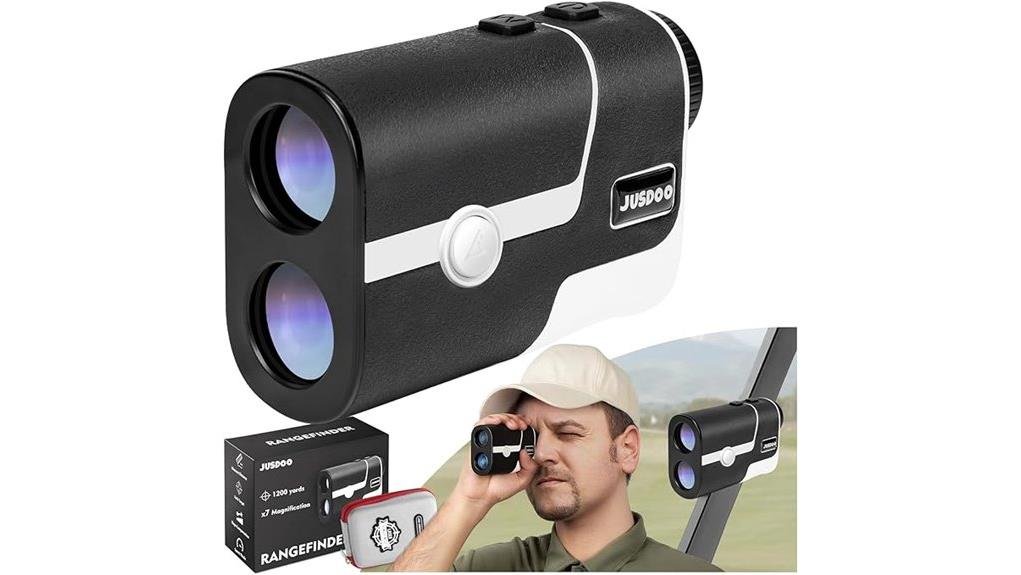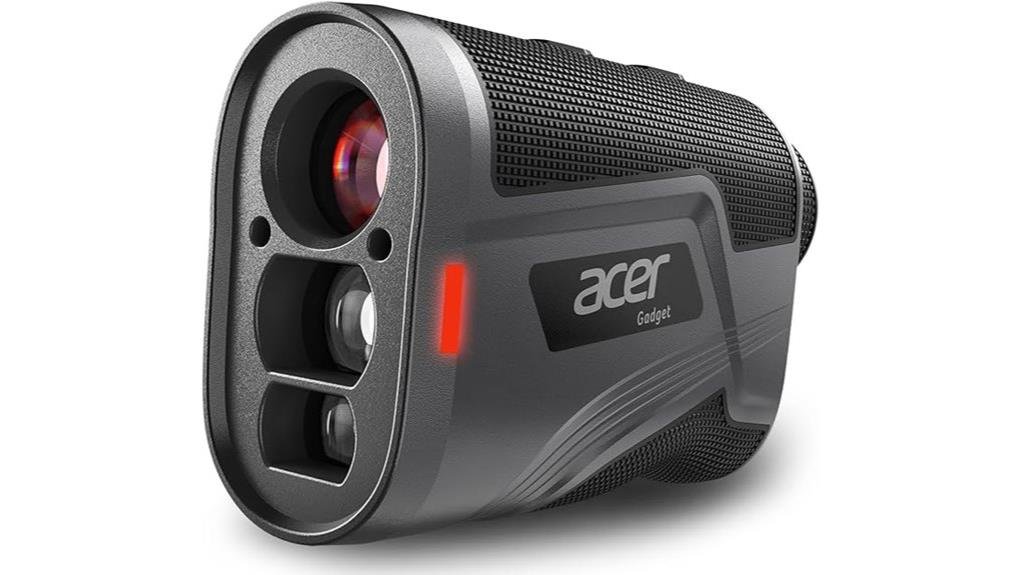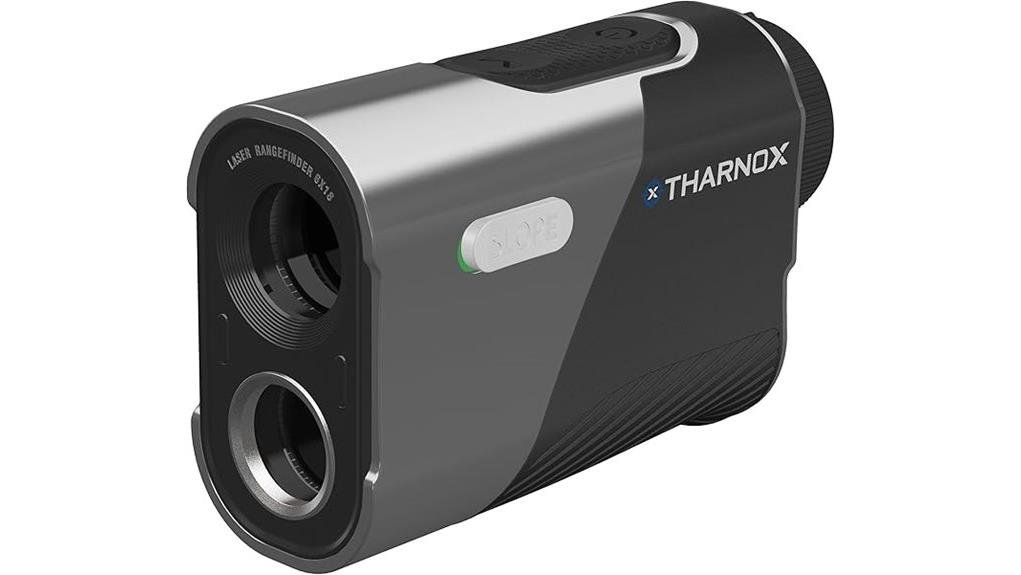
You’ll get reliable, 1‑yard accuracy out to about 1,300 yards with 6x optics, fast flag‑lock under 0.2s, and repeatable readouts useful for club selection. Slope converts straight‑line distance to playable yardage while triangulation gives off‑line fixes when you can’t get a direct lock. The compact, rubberized 5.3‑oz body, single‑button modes, magnetic mount and USB‑C battery suit on‑course use. Keep slope for practice, disable it for tournaments, and more specifics follow.
Some Key Takeaways
- Look for 1-yard accuracy and consistent repeatability across multiple readings for reliable club selection.
- Ensure 6x magnification, 1,300-yard range, and a flag-lock response under 0.2 seconds for practical on-course use.
- Confirm slope compensation, elevation math, and triangulation modes for adjusted yardages when direct laser lock is unavailable.
- Prioritize usability: one-button controls, soft rubberized finish, magnetic mounting, and USB-C charging with ~10,000 measurements.
- Verify tournament compliance by toggling slope off for competition and carrying proof of device settings when required.
How Slope and Triangulation Change Real-World Distance Readings
When you factor slope and triangulation into a yardage, the number on the glass no longer equals the shot you’ll play; slope compensation converts the straight-line distance into an adjusted, playable distance by accounting for incline or decline, while triangulation lets you compute distances between two off-line reference points so you can measure from your ball to a pin even when you can’t get a direct laser lock. You’ll use elevation adjustment and angle math to translate device readouts into club choices. Trust the process: apply the compensated yardage, verify with triangulation when visibility’s limited, and commit confidently to every shot. Many golfers also prefer rangefinders with laser technology for faster and more reliable readings.
What to Expect From Performance: Accuracy, Range, Magnification, and Speed
As you evaluate performance, focus on four measurable attributes—accuracy, range, magnification, and response speed—because they determine how reliably the device informs club selection and shot strategy. You’ll expect 1-yard accuracy across typical targets, with laser clarity that separates flag from background clutter. A 1,300-yard maximum range covers course requirements; 6x magnification gives practical target identification without excessive shake. Response speed matters: sub-0.2-second flag lock and fast readouts preserve natural shot timing. Evaluate consistency over multiple readings and varied light. Choose a unit that delivers repeatable metrics so your group and you gain confidence on every hole. Many golfers prefer models with slope and triangulation features to handle elevation and angle calculations accurately.
Hands-On Usability: Grip, Controls, Modes, Mounting, and Battery Life
With its soft rubberized finish and ultra-compact form, the unit feels secure in your hand and resists slipping during a swing or walk; at 5.3 oz it’s light enough for handheld use yet substantive enough to steady at 6x magnification. You’ll appreciate the secure grip and intuitive one-button layout: standard, scan, triangulation modes toggle instantly with tactile feedback and 0.2s flag lock vibration confirmation. Magnetic mounting snaps to carts or clubs reliably, keeping the unit accessible. USB-C charging delivers up to 10,000 measurements per charge. Golfers can choose from a variety of compatible distance trackers to suit their playing style, including range finders designed for course use.
When to Keep Slope On (And When to Toggle It Off for Tournament Play)?
Although slope mode gives you critical elevation-adjusted yardages that can change club selection on uphill or downhill shots, you should keep it off during any competition that prohibits assisted distance where slope is considered an advantage. You’ll want slope on for practice rounds, course management, and when dialing in yardages on uneven holes. Toggle it off for stroke play, match play, or club events that enforce Rules compliance and Tournament etiquette. Check local rules before play, carry proof of device settings if required, and communicate with partners. That disciplined approach keeps you competitive, compliant, and respected within your playing group. Many golfers also use tee time apps to coordinate rounds and manage booking logistics for practice and tournament play.
Who Should Buy This Range Finder and How It Compares to Alternatives
If you’re a casual player who values portability or a serious golfer who needs quick, precise yardages, this range finder suits both thanks to its ultra-compact, 5.3‑oz design and 1‑yard accuracy; the 6x optics and 1,300‑yard range give you the reach and clarity most on-course situations require. You’ll buy it if you’re a beginner golfer wanting reliable basics, a tech enthusiast seeking triangulation and USB‑C recharge, or a member wanting community-tested gear. Compared with bulky pro units it’s lighter and more affordable; versus minimalist laser pals it adds slope, triangulation, and magnetic mounting for versatile use. Many golfers pair this with swing analyzer gear to get both distance and performance data.
Some Questions Answered
Does It Include a Carrying Case or Protective Pouch?
Yes — it ships with a protective sleeve and a storage pouch so you’ll keep the unit safe and accessible. You’ll appreciate the snug protective sleeve for impact resistance and the storage pouch for organization in your bag or cart. You’ll feel confident knowing the magnetic mount and IPX54 rating are complemented by dedicated protection. This combination supports durability and belonging among golfers who care for their gear meticulously.
Can the Magnetic Mount Damage My Clubs or Cart Paint?
No — the magnetic mount won’t cause magnetic interference with your clubs’ performance, and it’s unlikely to demagnetize anything. You should, however, protect finishes: the magnet can cause paint abrasion if metal rubs against painted surfaces during movement. Use a soft cloth or adhesive pad between the mount and cart or club to prevent scuffing. You’ll keep gear safe, guarantee consistent readings, and belong to a group that cares for equipment.
How Long Does a Full USB-C Charge Actually Take?
A full USB-C charge takes about 2 hours. You’ll get excellent battery longevity—up to roughly 10,000 measurements per full charge—if you follow proper charging protocols: use the supplied cable, avoid extreme temperatures, and unplug once charged. You’ll appreciate consistent performance and long-term capacity when you treat charging as routine care. Join others who trust these steps to maintain reliable operation and extend overall battery lifespan.
Is Firmware Updatable for Future Feature Improvements?
Yes — the device supports firmware updates. You’ll get firmware updates via USB-C that let you install bug fixes and planned enhancements tied to the manufacturer’s feature roadmap. You’ll see update notes, and the process validates integrity before applying changes. You’ll be invited to join beta trials if you want early access; that keeps you connected to others shaping improvements while ensuring stable, reversible updates for everyday use.
What Warranty and Customer Support Options Are Offered?
You get a limited warranty covering defects for two years, and you’ll have access to premium support for fast troubleshooting and warranty claims. You’ll contact a dedicated team via phone, email, or chat; they’ll guide repairs, replacements, or firmware updates. You’ll receive clear service timelines, tracking, and community resources for tips. If you need escalated help, premium support routes you to senior technicians who prioritize your case.