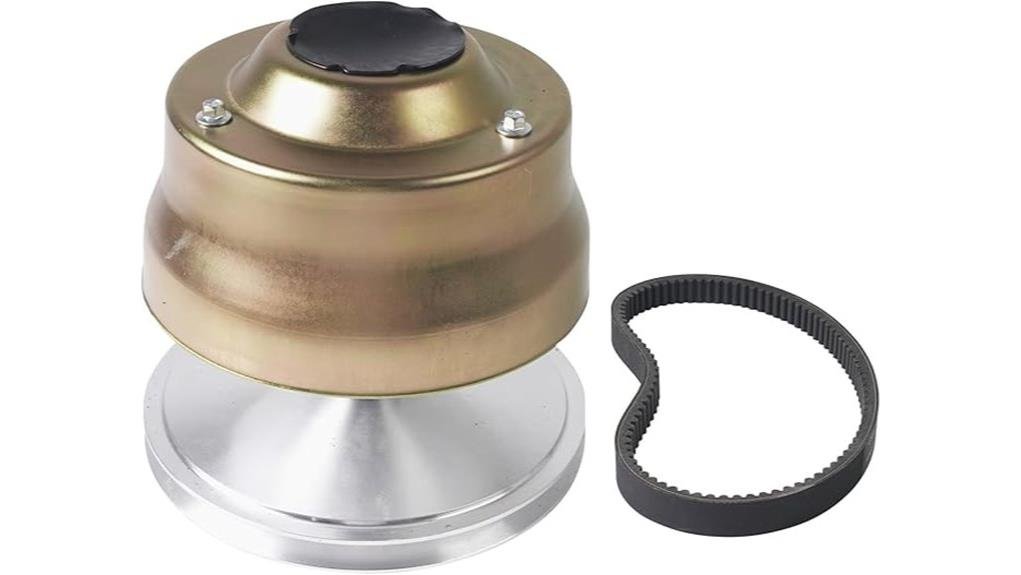
You’ll find the JN6-G6201-03 is a direct, precision-fit aluminum drive clutch with matching belt for Yamaha G2–G22 (1985–2006); it replaces OEM units without adapters and matches shaft and mounting tolerances. The aluminum sheave reduces weight, sheds heat faster, and promotes uniform wear to extend belt life under sustained loads. Install needs torque control, alignment checks, and initial break-in. If you want more detail on performance, maintenance, and cost trade-offs, keep going.
Some Key Takeaways
- Direct replacement for Yamaha G2–G22 (1985–2006) with OEM-matching mounting geometry and no adapter plates required.
- Aluminum construction reduces weight, improves heat dissipation, and lowers surface temperatures versus cast alternatives.
- Includes matched drive belt; cooler operation and more uniform wear extend belt life when aligned correctly.
- Installation requires shaft/bearing inspection, torque to spec, initial low-load break-in, and belt tension recheck after first ride.
- Higher upfront cost but often offsets through fewer belt replacements and reduced wear on mating components for frequent-use carts.
Why the JN6-G6201-03 Fits Yamaha G2–G22 Models (1985–2006)
Because Yamaha maintained consistent mounting geometry and drive specifications across G2–G22 models from 1985–2006, the JN6-G6201-03 fits as a direct replacement without modification. You’ll find mounting points and shaft interfaces match OEM tolerances, so engine mounting requires no adapter plates. Inspect mating surfaces for wear, then position the unit to preserve original clutch alignment and belt path. Torque fasteners to specification and confirm free rotation before routing the belt. This objective fitment reduces installation variables and supports community confidence that replacements stay true to factory design. Always verify model/year compatibility prior to purchase and installation. Many golfers seeking improved performance also prefer using efficiency tools designed specifically for golf equipment maintenance and tuning.
What’s in the Box and How the Aluminum Construction Helps Performance
When you open the box you’ll find one aluminum drive clutch and a matching drive belt packaged for immediate installation; the clutch is finished to OEM tolerances and the belt is sized to the listed Yamaha G-series models. You’ll get a direct replacement set ready for fitment to compatible 4-cycle Yamaha carts. The aluminum construction delivers measurable weight reduction versus cast alternatives, improving rotational response and reducing parasitic load. Its stiffness and surface finish support consistent engagement and contribute to noise dampening during operation. You’ll appreciate the precise fit, predictable behavior, and the shared confidence among owners who value reliable upgrades. Many golfers transporting their gear also rely on hard-sided travel cases to protect clubs and accessories during trips.
Real-World Performance: Wear, Heat Dissipation, and Belt Interaction
While testing in real-world conditions, you’ll notice the aluminum drive clutch shows lower surface temperatures and more uniform wear patterns compared with typical cast alternatives. You’ll see improved heat dissipation under sustained loads; thermal cycling produces fewer microcracks and reduces hotspot formation. Wear tracks remain consistent across the sheave faces, minimizing belt edge fray when pulley alignment is correct. The included belt runs cooler and maintains tension longer, so you’ll schedule fewer replacements. Monitor for debris and contamination that still accelerate wear. Overall, performance gains are measurable and repeatable, and you’ll feel confident integrating this part into your maintenance routine. This part is especially useful for golfers focused on injury prevention because durable, well-maintained equipment helps reduce strain during practice and play.
Installation and Fitment Checklist: Tools, Steps, and Compatibility Tips
Having seen how the aluminum drive clutch improves heat management and belt longevity, you’ll want a clear installation and fitment checklist to reproduce those benefits reliably. Gather tools: torque wrench, socket set, belt gauge, impact optional. Confirm part number (JN6-G6201-03/04) and vehicle fitment—Yamaha G2–G22 models, 1985–2006. Follow a safety checklist: disconnect battery, secure cart, wear eye protection. Remove old clutch, inspect shaft and bearings, fit new clutch and belt per alignment marks. Tighten fasteners to specified torque specs. Run initial break-in at low load, recheck belt tension and fasteners after first ride. Be sure to stock essential DIY repair supplies like golf club repair kits to keep tools and parts organized for future maintenance.
Buy or Pass? Cost, Replacement Value, and When to Choose This Part
Although aluminum clutches cost more upfront than stamped-steel originals, you’ll often recoup value through longer belt life, better heat dissipation, and reduced wear on mating components—making them worthwhile when your cart sees frequent use, steep terrain, or high ambient temperatures. Do a cost analysis: compare initial price against expected belt replacements, labor, and potential damage to the transmission. Choose this part when you prioritize durability, reduced downtime, and measurable long term value. Pass if you rarely use the cart, operate lightly, or need the lowest upfront spend. Verify fitment JN6-G6201-03/04 for Yamaha 1985–2006 before buying. Consider consulting a consignment specialist for used carts and parts to maximize resale value and ensure compatibility with your club’s consignment tips.
Some Questions Answered
Does This Clutch Require Rebalancing After Installation?
No, you typically won’t need to rebalance after installing this clutch; it’s machined from aluminum to maintain consistent weight balancing and minimize rotational harmonics. Still, you should verify fitment and spin the assembly to confirm smooth operation. If you detect vibration or unusual harmonics, you’ll want to check belt alignment, mounting torque, and consider professional balancing. Reach out for support within 24 hours if issues persist.
Is the Belt Pre-Tensioned or Needs Adjustment?
The belt isn’t pre-tensioned; you’ll need to adjust it. You’ll perform a tension check after installation and verify pulley alignment to guarantee proper operation and longevity. Use manufacturer torque specs and measure deflection per guidance, then recheck alignment and tension. If you’re unsure, reach out for support within 24 hours—you’re part of a community that helps each other get safe, reliable installs. Follow safety and installation procedures.
Are There Warranty Details or Duration Included?
No specific warranty duration’s listed, but you’ll get warranty coverage and a clear claim process via customer support. You’ll contact support (response within 24 hours) to start a claim, provide purchase and fitment details, and follow their instructions. You’ll need to confirm compatibility and installation compliance for eligibility. This technical, inclusive approach guarantees you feel supported while meeting required procedures for coverage and successful claim processing.
Is This Compatible With Electric-Start Conversions?
Yes — you can use it with many electric-start conversions, but you’ll need to verify starter compatibility and account for torque implications. You’ll confirm the clutch fits your Yamaha model/year and that the starter engages the clutch spline correctly. Because aluminum alters inertia and heat dissipation, you’ll assess resulting torque transmission to avoid slippage or overload. If unsure, contact support within 24 hours for fitment guidance and installation advice.
Can I Use OEM or Aftermarket Belts Interchangeably?
You can use OEM or aftermarket belts interchangeably only if they match OEM compatibility specs and material differences. Verify belt length, width, tooth profile, and construction (rubber compound, reinforcement) to guarantee fit and performance. If an aftermarket belt meets OEM tolerances and uses comparable materials, it’ll perform similarly; if not, you risk premature wear or heat issues. Confirm specs and join forums or support channels for shared experiences.