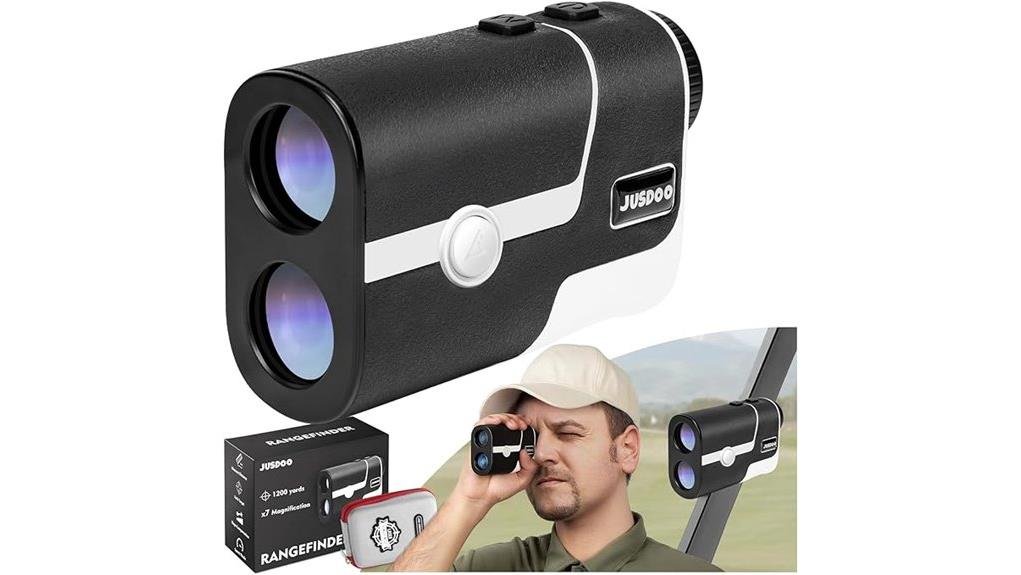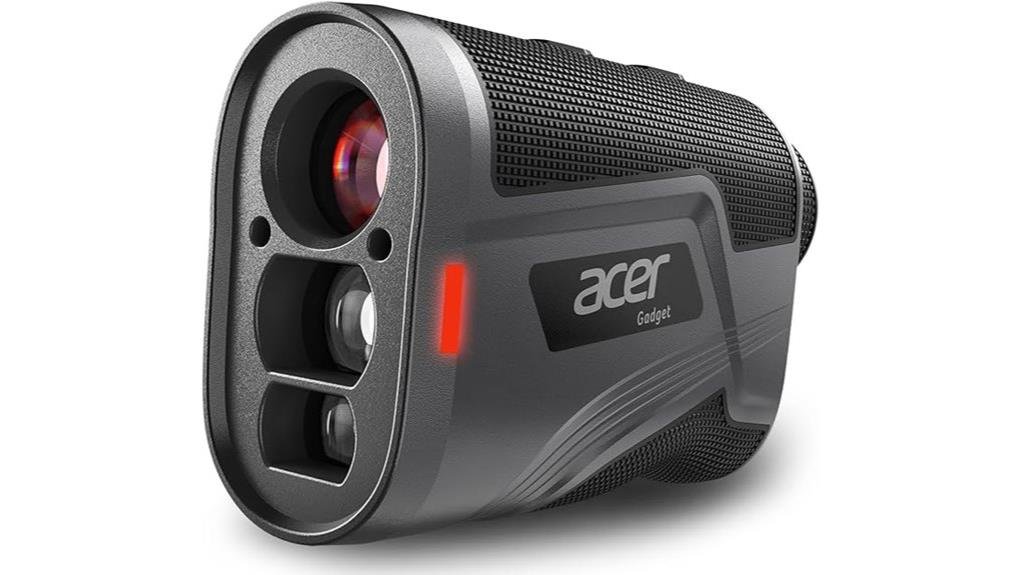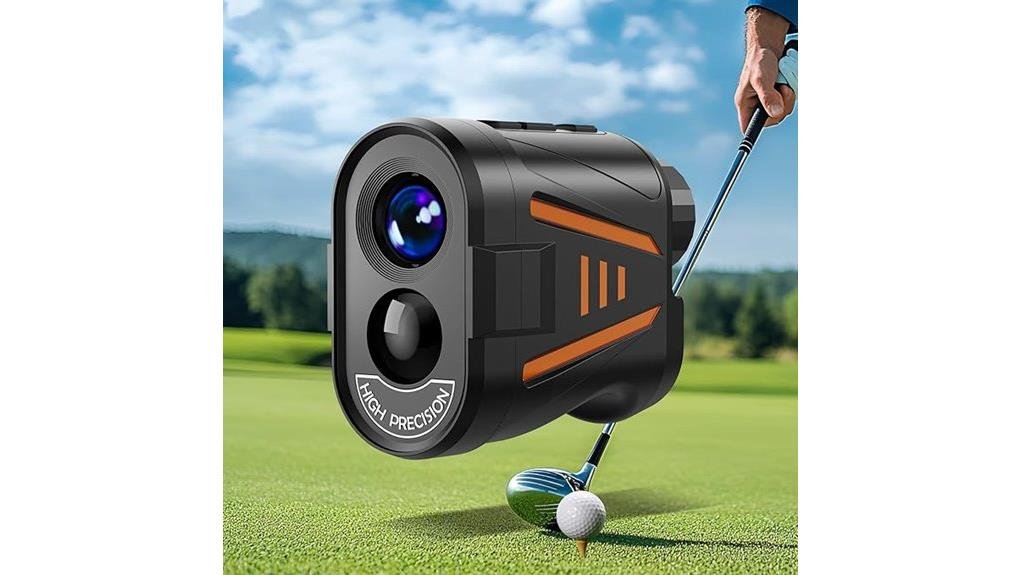
You’ll get pro-level yardages and reliable uphill/downhill adjustments with a compact slope-compensating rangefinder that simplifies club selection and course management. It measures 3–1,800 yards with about ±1 yard accuracy, 6× optics, a transflective LCD, and modes for slope, distance, angle, and height plus flag lock and continuous scan. The lightweight, palm-friendly design and magnetic mount make it easy to use on the go, and slope mode gives actionable adjusted distances — keep going to learn specifics.
Some Key Takeaways
- Confirms slope compensation adjusts measured range using angle data to give true playing distance for club selection.
- Reports range accuracy 3–1,800 yards with ±1 yard performance matching real-world readings.
- Notes fast flag lock, reliable target acquisition, and continuous scan for consistent course use.
- Highlights compact, lightweight, magnetic, water-resistant design with transflective LCD and intuitive controls.
- Advises using slope mode for uphill/downhill shots and disabling it during tournament play where restricted.
How Slope Compensation Works and Why Golfers Care
Although a flat-line distance gives you a starting point, slope compensation adjusts that number for uphill or downhill shots so you’ll pick the right club. You’ll get a true playing distance by combining measured range with angle data; the device calculates how slope alters ball flight and suggests a yardage that reflects real conditions. That means your club choice and stroke adjustment become more reliable across varying terrain. You’ll trust readings that account for elevation, reducing guesswork and improving consistency. Use this feature to build confidence with teammates and enjoy fair, data-driven decisions on every hole. Many golfers rely on laser rangefinders sold by specialty retailers to get accurate measurements and consistent performance.
Quick Specs at a Glance: Range, Accuracy, Optics, and Modes
When you need a quick overview before teeing off, these specs tell you what matters most: a 3–1800 yard range with ±1 yard accuracy, 6× magnification optics, and mode options that include Golf Slope Compensation, Distance, Angle, and Height. You’ll get a transflective LCD and rotating eyepiece for clear, fast reads. Compact, magnetic and water resistant, the unit fits your palm to reduce shake. Helpful features include flag lock and continuous scan. Controls are simple; battery life is reasonable for full rounds. Support runs 24/7, and a 1-year warranty coverage gives you added confidence. Our shop offers a curated selection of devices to help you find the perfect tracker for your game.
Real-World Performance: Measuring Distance, Slope, Angle, and Height
Having the specs in mind helps, but you’ll want to know how the unit performs on the course: it locks onto flags quickly, reads targets from 3 up to 1,800 yards with the claimed ±1 yard accuracy, and maintains reliable returns during continuous scan. You’ll see consistent target acquisition on pins, trees, and bunkers; the flag lock reduces guessing and speeds decisions. Slope mode gives actionable adjusted distances for uphill and downhill shots, helping you anticipate ball roll. Angle and height measurements are precise enough for club selection and trouble shots. Overall, real-world performance matches the spec sheet without surprises. This makes it a great choice for golfers looking to improve their game with accurate rangefinder technology.
Handling and Usability: Size, Magnetic Mount, Controls, and Display
Because the unit is compact and light, you’ll get steady one‑handed use and minimal arm fatigue during a round, and the ergonomic shape really cuts down on hand shake. You’ll appreciate the compact footprint that fits your palm and tucks into pockets without bulk. A built‑in magnetic attachment secures the rangefinder to metal clubs or carts, keeping it handy between shots. Controls are intuitive: a single power/measure button, an M button to toggle modes, and H for height — all responsive with minimal learning. The transflective LCD stays readable in sunlight and overcast conditions, and the rotating eyepiece sharpens focus quickly. These features make the unit a practical choice for golfers who favor handheld golf GPS gear.
Who Should Buy This Rangefinder and When to Choose Slope Mode
If you play regularly and value quick, reliable distance readings without bulk, this rangefinder is a smart buy—its ±1‑yard accuracy, 6× optics, and compact ergonomic build suit weekend players, low‑ to mid‑handicappers, and club golfers who want pro‑level measurements without a steep learning curve. You should buy it if you want dependable yardages, quick flag lock, and simple controls. Beginner golfers and senior players will appreciate the lightweight form and clear transflective LCD. Use slope mode for uphill shots, tight course management decisions, and when elevation alters club selection; switch it off during tournaments or when slope is restricted. Consider pairing the unit with other golf GPS gear from a specialized retailer to improve overall course navigation and shot planning, especially when combining golf GPS devices with slope-capable rangefinders.
Some Questions Answered
Does This Rangefinder Work for Hunting or Only Golf?
You can use it for hunting as well as golf. You’ll get 3–1800 yard range with ±1 yard accuracy, target tracking and continuous scan help you acquire game, and Golf Slope Mode can be ignored while you hunt. It lacks built‑in ballistics integration, so you’ll need an external app or dope chart for precise holdovers. The compact, water‑resistant design, magnetic mount and clear 6× optics make it comfortable and reliable in the field.
Can Slope Mode Be Disabled for Tournament Play Compliance?
Yes — you can disable slope mode for tournament settings. You’ll press the M button to toggle out of Golf Slope Compensation Mode, ensuring slope legality during competition. That lets you use distance-only measurements compliant with most rules. You’ll feel confident knowing the device supports both casual play and regulated events, and the simple control keeps everyone included and on the same page about permitted functionality.
How Long Does the Battery Last Under Typical Use?
You’ll get roughly 8–12 hours of active use per battery, depending on power consumption and feature use. If you mostly take occasional measurements with slope off, battery longevity trends toward the higher end; frequent continuous scan or slope measurements reduce runtime. You can conserve power by limiting continuous scan and using standby between shots. Support offers tips and a one-year warranty if you run into early failures.
Is There a Carrying Case or Belt Clip Included?
Yes — you get a padded pouch for protection and a magnetic holster for quick attachment to carts or clubs. You’ll appreciate the snug padded pouch when you store the unit, and the magnetic holster keeps it handy during rounds. Both are designed to fit the compact, ergonomic body and reinforce that you’re part of a community that values reliable, convenient gear on the course.
Can Firmware Be Updated or Recalibrated by Users?
No — you can’t perform firmware updates or full user recalibration on this unit. The device lacks user-accessible firmware updates; any firmware service or internal recalibration needs manufacturer support. You can, however, perform basic checks and alignment via the rotating eyepiece and height mode to confirm readings. If you suspect persistent accuracy issues, contact the 24/7 online support for troubleshooting, repair, or warranty service.